After the guide · A practical next step

Move from AI interest to a trusted financial model

AI can only provide reliable financial answers when it understands how your institution's resources, activities, courses, programs and students connect. Start with a two-week readiness study—or move directly to a working higher education model in four weeks.

Built for higher education finance

A causal and semantic foundation for explainable analysis and AI

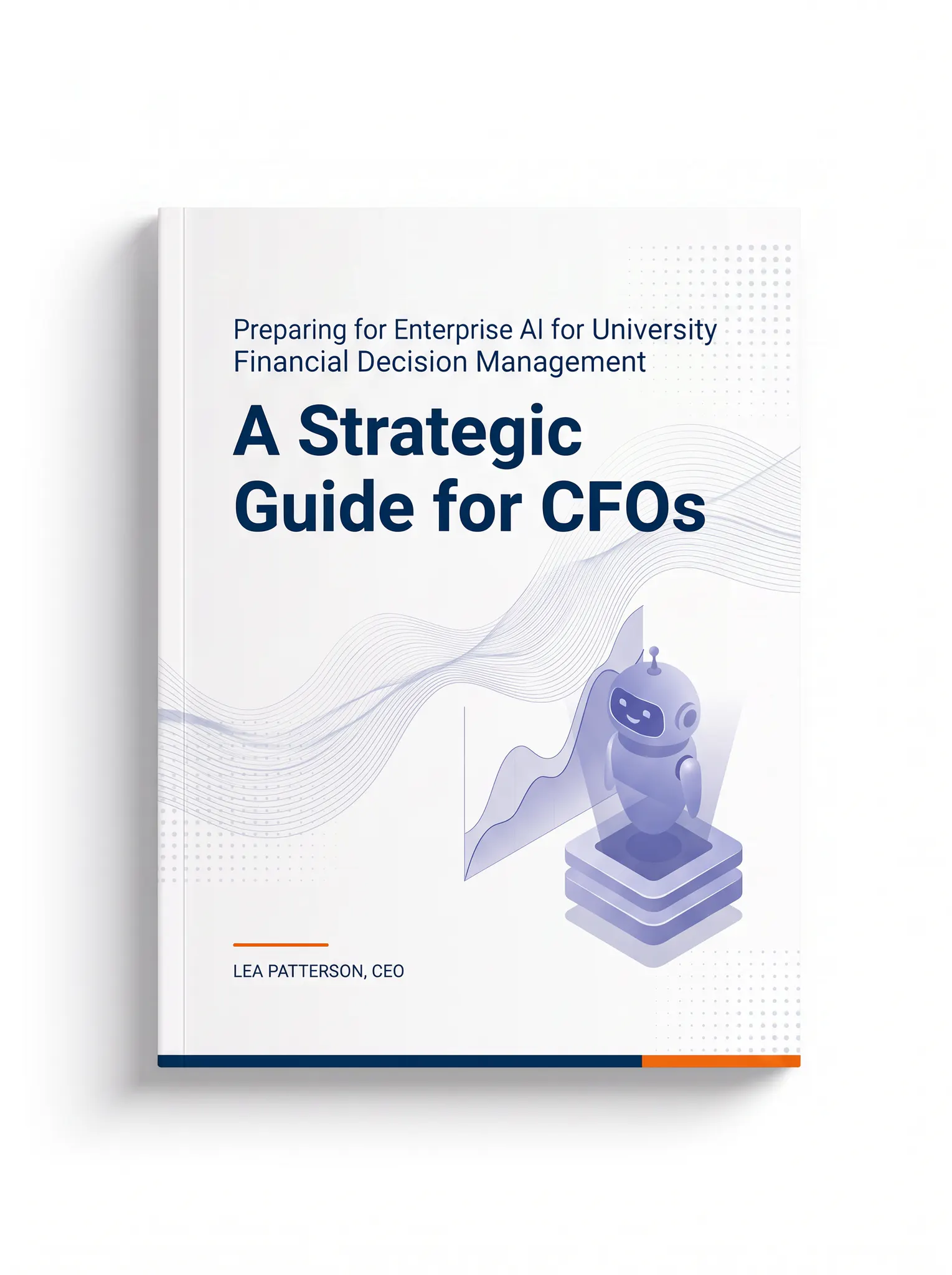
Preparing for Enterprise AI — A Strategic Guide for CFOs whitepaper cover

Choose your starting point

Assess readiness first—or build the model now

Both paths begin with the decisions your institution needs to make. The difference is whether your core finance and student data are ready to support implementation.

Two weeks

AI Financial Model Readiness Study

A defined assessment of whether your institution's data, scope and decision requirements are ready to support an AI-enabled financial model.

Best when

You need to assess the data, clarify the use cases and define a reliable project scope before investing further.

  • Priority financial decisions and AI use cases defined with your team
  • Assessment of required finance, student and supporting data
  • Recommended model scope and level of detail
  • Data gaps, risks and governance requirements
  • AI Financial Model Readiness Report and Implementation Roadmap
Book a readiness discussion
Direct path

Four weeks

Rapid Model

A working implementation of Pilbara's standard higher education model, initially using finance and student data.

Best when

Your finance and student data are accessible and you are ready for program- and course-level financial visibility.

  • Revenue, cost and margin by academic program and course
  • Financial relationships between programs and the courses they consume
  • Results by college, school or department
  • Cost and margin per student or credit-hour measure
  • A governed foundation for conventional analysis and emerging AI applications
Discuss a Rapid Model

Why the model comes first

Accessible data is not the same as explainable financial intelligence

An AI assistant can find transactions, but it does not inherently understand your institution's definitions, allocation rules or operating relationships. A causal model connects resources through activities to institutional outputs. A semantic model gives those relationships governed business meaning.

Institutional data

Finance and student data provide the initial evidence base.

Causal model

Resources, activities, courses and programs are connected through explicit rules.

Trusted answers

Leaders can trace results back to governed definitions and assumptions.

Two-week readiness study

A clearly defined project—not an open-ended consulting exercise

If you are not yet sure whether the data are suitable or where to begin, the study creates a specific account of what is ready, what is missing and what the implementation should deliver.

  • Priority financial decisions and AI use cases defined with your team
  • Assessment of required finance, student and supporting data
  • Recommended model scope and level of detail
  • Data gaps, risks and governance requirements
  • AI Financial Model Readiness Report and Implementation Roadmap

Defined output

AI Financial Model Readiness Report and Implementation Roadmap

The report turns uncertainty into a practical decision: proceed to implementation, address defined gaps first, or adjust the intended scope. If the institution is ready, the study becomes the foundation for the Rapid Model.

Four-week Rapid Model

Useful immediately. Expandable as your requirements develop.

The initial implementation uses finance and student data to establish a consistent institution-wide view. It can then be expanded with HR, payroll, timetabling, facilities or research data.

01

Revenue, cost and margin by academic program and course

02

Financial relationships between programs and the courses they consume

03

Results by college, school or department

04

Cost and margin per student or credit-hour measure

05

A governed foundation for conventional analysis and emerging AI applications

From first discussion to a defined next step

Start with the decision your institution needs to make, then match the engagement to the readiness of your data.

1

Clarify the decision

We identify the financial questions, AI use cases and institutional scope that matter most.

2

Assess or build

Choose a two-week readiness study, or move directly to a four-week Rapid Model when the core data are accessible.

3

Create a trusted foundation

Leave with a practical roadmap or a working higher education cost and margin model that can support reliable analysis.

Your next step

Which starting point fits your institution?

Not sure whether you are ready? Start with a two-week readiness study. Already have accessible finance and student data? Move directly to a working Rapid Model in four weeks.

Share your preferred path and we will follow up personally to discuss what would be involved.

Your enquiry is sent directly to the Pilbara team. No automated sales sequence.