
We'll take one thing off your plate
Your academic program financial analysis. We build the detailed economic model of your university, the reports your leaders use and the AI set-up on top, so your finance team gets the answers without the spreadsheet work.
Request a demoYour finance team's list this term
- Budget and forecast cycle
- Council and committee reporting
- Enrolment and revenue planning
- Academic program cost and margin analysisWe take this one
One job, done for you, with more on top
You send the raw data. We do the rest, and you get three things your team can use from day one.
Your university model, built for you
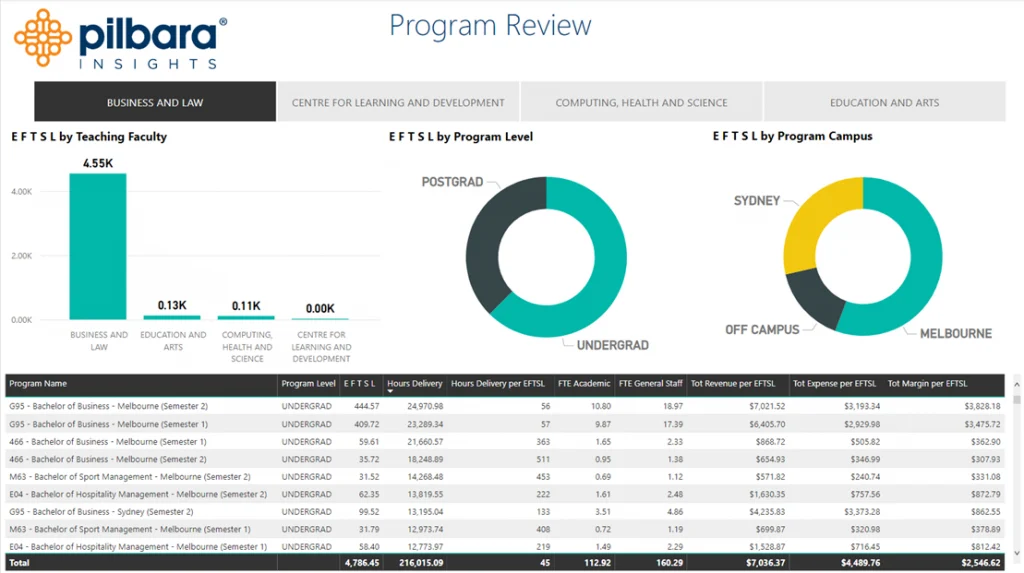
We prepare your finance and student-management data, build your model from the bottom up, starting with when, where and how each subject is taught, and apply shared costs and overheads by causal allocation. Then we build the reports that show revenue, cost and margin for every program and course.
- Data prep, model build and report build, all by our team
- Starts with finance and student-management data
- Grows later with HR, payroll, facilities and timetabling data
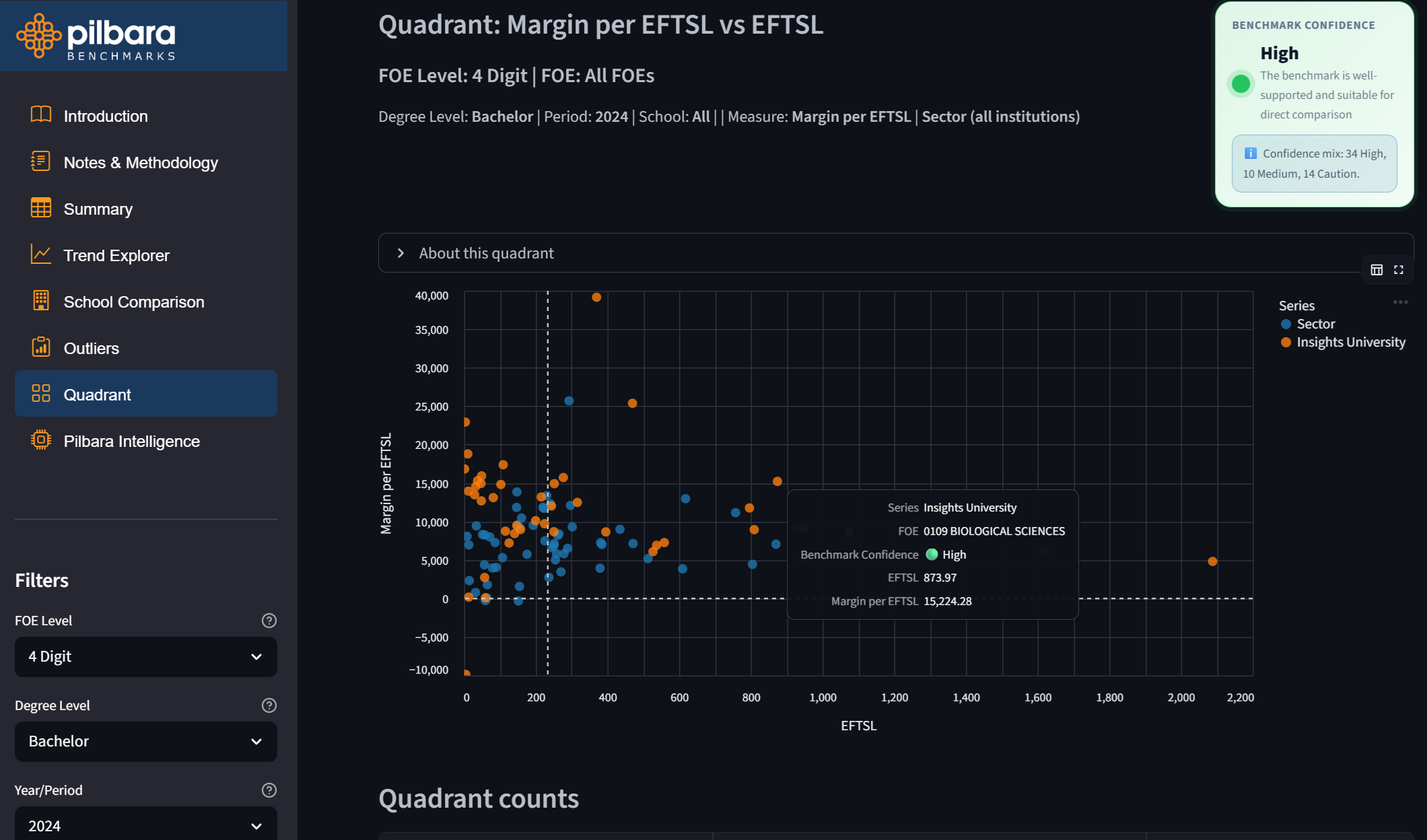
Pilbara Benchmarks for Australian universities
Australian universities also get access to Pilbara Benchmarks. See how each of your disciplines compares with the sector by Field of Education, using data drawn from real university models, so you can spot where you lead and where to improve.
- Compare disciplines at 2- and 4-digit Field of Education level
- Sector median, range and your position side by side
- Built from real Australian university models
Your AI, connected to your own model
We build the semantic model that lets your AI query your own university model. Your team asks about any program, course or scenario in plain English and gets answers grounded in your data.
- Questions answered from your model, not from guesswork
- Scenario questions, like a fall in enrolments
- Set up by us as part of the build
A 10% fall in domestic Engineering enrolments would reduce the university's surplus by $114,687 (0.14%) from $83.58 million to $83.47 million.
Answer generated in 67 seconds

The economics behind our model
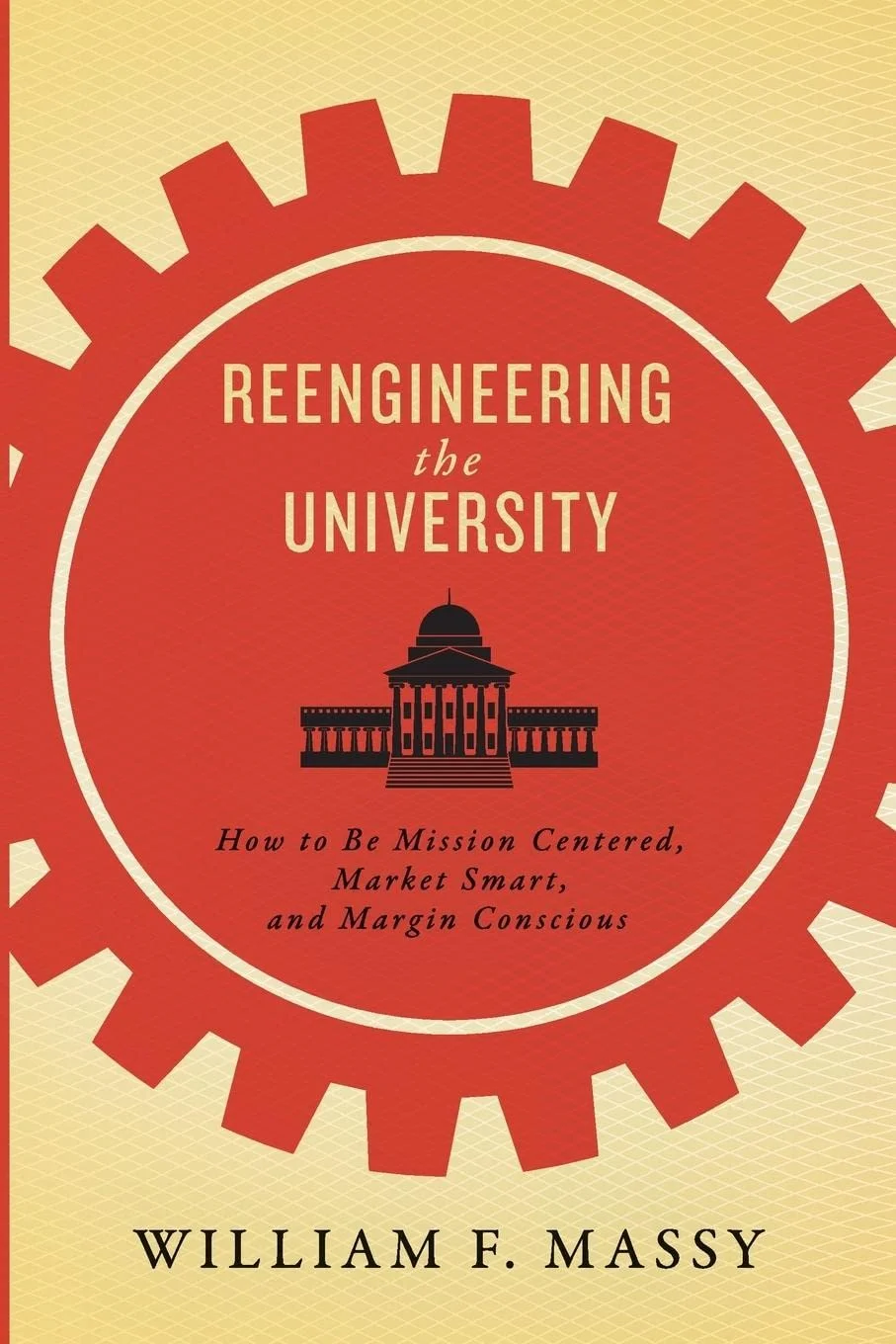
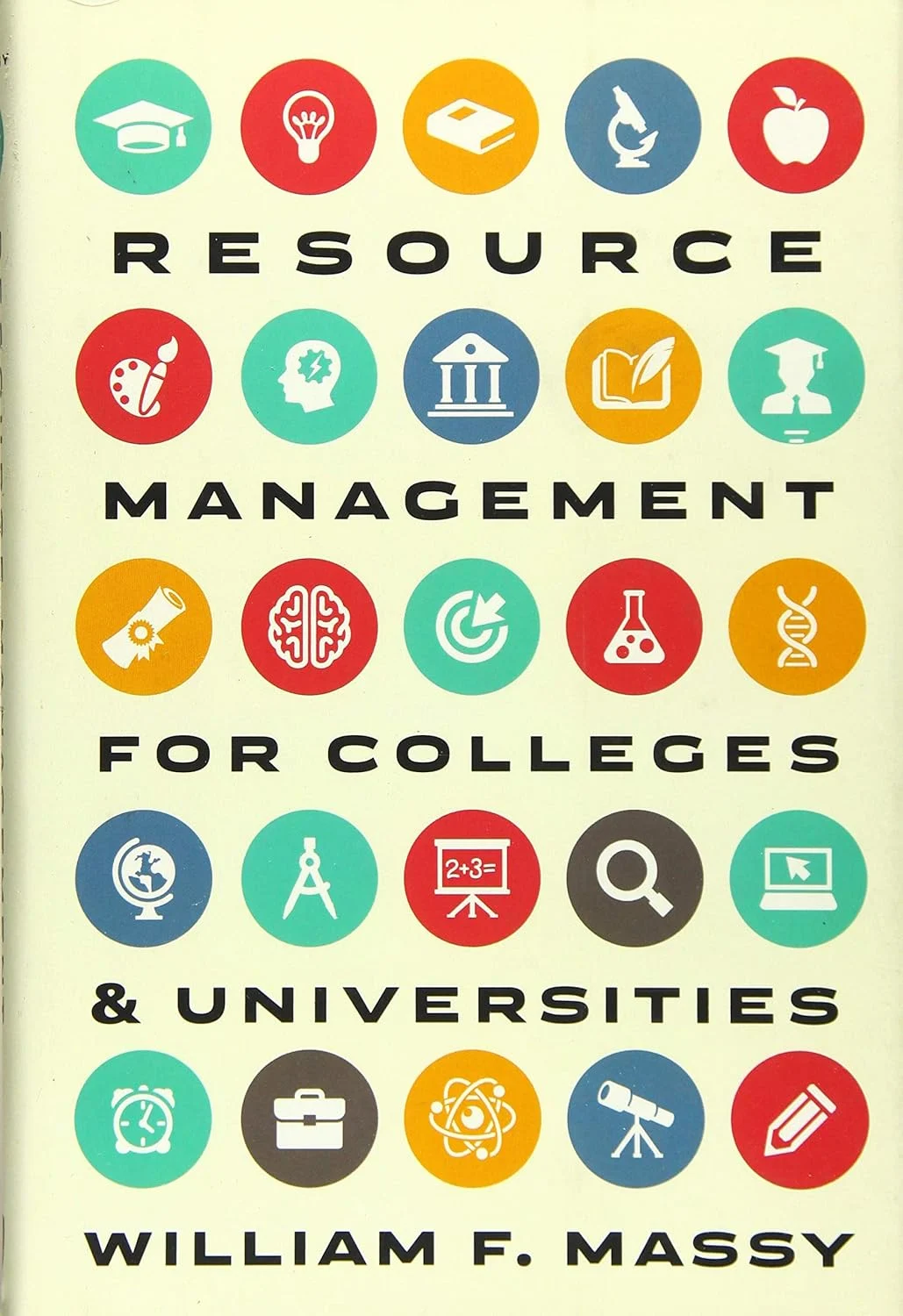
Professor William F. (Bill) Massy is an expert microeconomist who spent decades applying rigorous economic principles to explain the forces at work on universities and the flaws in the academic business model.
He recognised how the Pilbara model helps universities meet those challenges, and wrote about it in two of his books.
- Former Vice-President for Business and Finance and Vice-Provost, Research, Stanford University
- PhD in economics and MS in management, MIT
Universities already making decisions with their Pilbara models

“We can actually understand the full cost of our instructional programs…we’ve never had anything close to that kind of information in the past. This is the first time we can honestly understand how much they should cost and how we should resource them. Because this university has worked on a historical budget model for many years, this is revolutionary.”
Cynthia R. Hale
Associate Vice President for Finance and Personnel in the Office of the Senior Vice President and Provost, University of Maryland

“Pilbara’s demonstrated higher education sector knowledge has provided CQU with a model derived from granular-level data, whilst also being timely, transparent, accurate and flexible for any future CQU or sector changes. The Pilbara team are always professional and flexible, and in constant contact as to more innovative costing approaches and sector updates.”
Anita Anderson
Deputy Director Corporate Budget, Central Queensland University
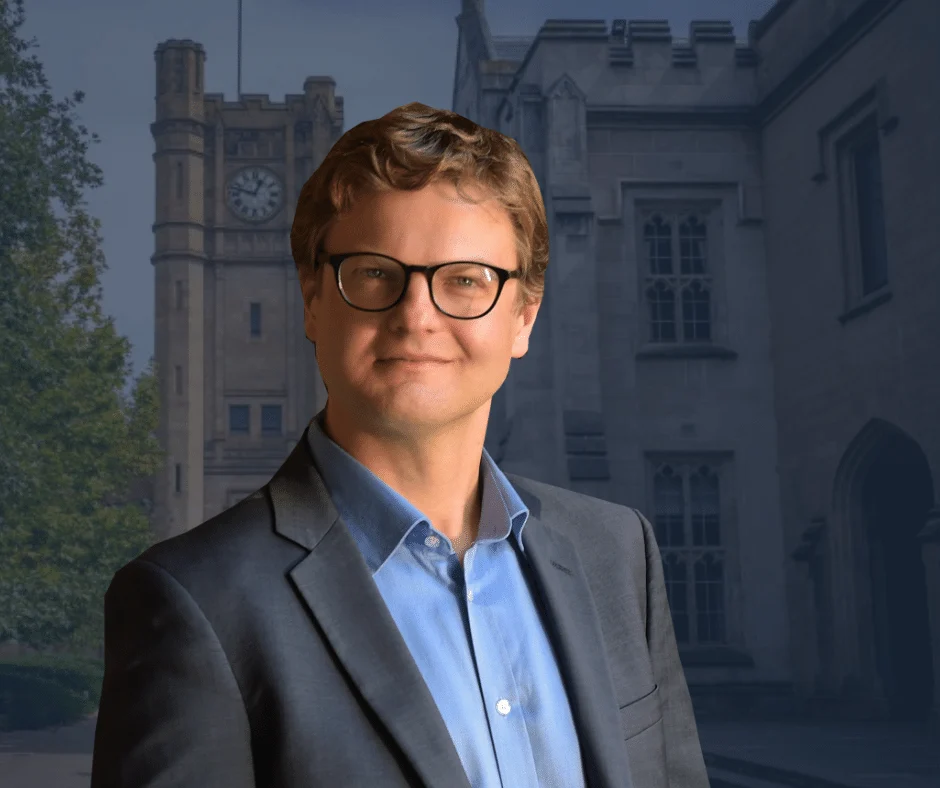
“Understanding what drives cost in higher education is a really fiendish challenge.”
Dr Gwilym Croucher
Researcher at the Melbourne Centre for the Study of Higher Education at the University of Melbourne
Hand us the one job
Request a demo and we'll walk you through a working model, its reports and AI answers, and the data we'd need from you to build yours.

- SOC 2 Type 2 attested
- Built on Microsoft and Snowflake